Air Tightness | Everything You Need To Know

Air leakage happens where the conditioned airflow enters and leaves a construct uncontrollably through fissures and holes. The phenomenon is also known as infiltration, which is entirely different from what ventilation is. Latter is clean and fresh air that enters the building in a controlled way to discharge extra moisture and alleviate odours and stuffiness.
As Air Leakage is unrestrained, too much air can enter the house during chilly or windy weather, resulting in an extreme loss of heat and an unpleasant feeling of cold draughts.
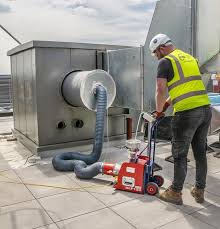
Air Leakage plays a crucial role in the energy efficiency of buildings, and consequently, an air leakage test is imperative to demonstrate that the airtightness targets set for building energy estimations have been accomplished in real terms.
Why Airtightness Evaluation Matters?
Airtightness is a critical determinant in building energy efficiency and is, therefore, a prominent feature of government-led reforms and measures to fight climate change by improving energy performance. Heating houses require combusting fossil fuels that lead to CO2 emissions and global warming—lessening the amount of air leakage results in much less heat loss, which in turn decreases the energy expended by the heating system.
There are also health issues related to airtightness – when buildings have inadequate levels of regulated ventilation and high levels of unrestrained air leakage, this can cause severe moisture and mould growth that can impact the wellbeing of the inhabitants.
Last but not least, elevated levels of air leakage may lead to moisture build up in the building fabric, ultimately resulting in very costly repairs to set things right.
Whom do the regulations impact?
Air leakage test and subsequent targets have been phased in steadily to encompass all latest developments.
In the 2002 Building Regulations, only industrial and commercial raisings with a total floor area of more than 1000 m2 were mandated to be evaluated for airtightness. This was widened in 2006 by means of the approved document L2A of the Building Codes to include commercial and industrial buildings of all dimensions.
To know more about
the air leakage test, connect with Air Tightness & Sound
Insulation Specialists now at https://siteairtesting.co.uk.

Comments
Post a Comment